Edwards, C., Hine, A. (2024) Tomorrow’s More-Than-Human Miners of the Deep. In FA. Jørgensen & D. Jørgensen (Eds), Sharing Spaces. Pittsburgh University Press, 150-167.
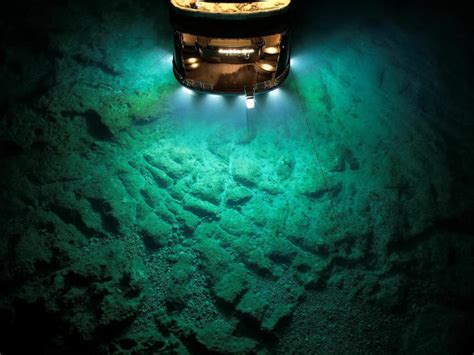
This chapter explores the expanding conceptualisation of urban processes beyond traditional city boundaries, focusing on the deep-sea mining industry as a case study. It examines how human-animal relationships, transformed by technology, manifest urban influences in remote oceanic environments. We investigate the “instrumentation” of non-human entities, particularly southern elephant seals (Mirounga leonina) and Autonomous Underwater Vehicles (AUVs), in underwater exploration and data collection; and argue that these technologically augmented beings represent a form of “mobile infrastructure”, which enables remote oceanic research and may soon converge with deep-sea mining operations. By highlighting non-human agency within a framework of planetary-scale urban processes, we seek to reframe our understanding of these entities beyond mere instrumentation.Using a mixed methodological approach, including mapping, imaging, and speculative fiction techniques, we project future scenarios of deep-sea mining. This imaginative exploration focuses on the experiences of elephant seals and underwater robots, offering insights into the complex interrelationships between humans, animals, and technology in increasingly urbanised global contexts. Drawing on interdisciplinary scholarship from urban studies, geography, and political philosophy, we propose a reconceptualisation of “urban” as a socio-spatial condition of “sharing space with strangers.” This framework allows for the consideration of remote oceanic environments as urban spaces, characterised by the interaction of human and non-human actors. The chapter contributes to ongoing debates about urbanisation, environmental exploitation, and the role of technology in mediating human-animal relationships. It calls for new solidarities and subjectivities that challenge existing representations of urban processes and their impact on global ecosystems.
 Marine Political Ecology Collective