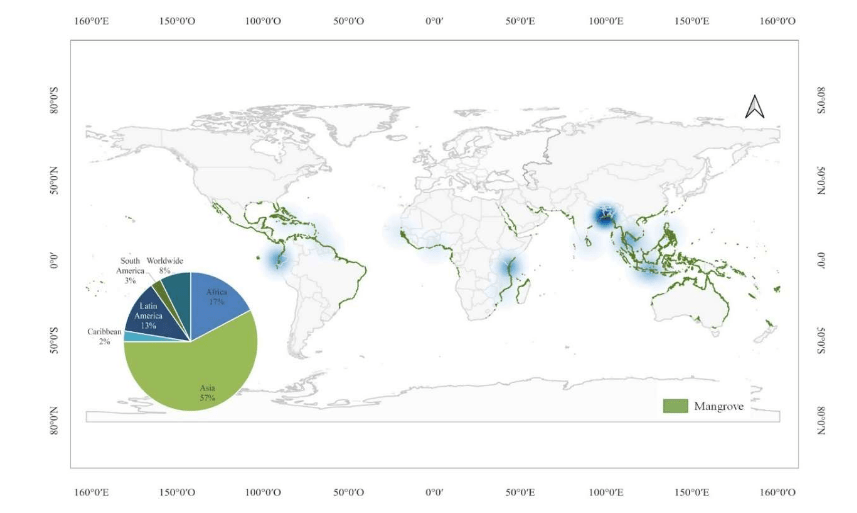
Borges, R., Kasanoski, D. S., & Eyzaguirre, I. A. (2025). Community-based management and co-management of mangroves in the Anthropocene: A global review of current topics and trends. Mangroves in the Anthropocene: Climate Change and Conservation Challenges, 87. https://mangrove.or.jp/english/subpage/publications.html#newbook
Mangroves represent one of Earth’s most remarkable ecosystems, serving as critical transition zones between terrestrial and marine environments in tropical and subtropical regions worldwide. These unique coastal forests are invaluable in supporting global biodiversity, protecting coastlines from erosion and storm damage, and providing essential socio-economic benefits to local
communities. In recent years, their significance in climate change mitigation has gained increasing recognition due to their exceptional capacity for carbon sequestration and storage, earning them the designation of blue carbon ecosystems. However, these vital ecosystems face unprecedented threats from multiple fronts.
 Marine Political Ecology Collective