
researches the intersection of environmental and social issues in the extractive industries and industrial contexts, with a particular focus on planning approvals and places in flux. Within this they are interested in the social and political lives of minerals, chemicals, and things that are perceived as inert or not living. They are currently a Postdoctoral Research Fellow at the Helmholtz Institute for Functional Marine Biodiversity, Germany.
Outputs

Slippery substances: accreting alternative chemical knowledges in a heavy industry port
How might chemicals slip unnoticed across boundaries and through bodies in a range of material and bureaucratic registers? This article responds by extending emergent theorisations of ‘slipperiness’ into the nascent field of chemical geographies. Slipperiness offers a framing for chemicals that challenges and also situates contemporary managerial regimes that subscribe to universalised concepts such as pollution thresholds.
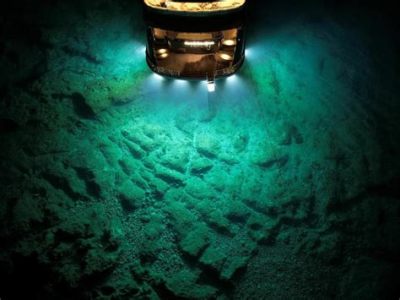
Tomorrow’s More-Than-Human Miners of the Deep
This chapter explores the expanding conceptualisation of urban processes beyond traditional city boundaries, focusing on the deep-sea mining industry as a case study. It examines how human-animal relationships, transformed by technology, manifest urban influences in remote oceanic environments.
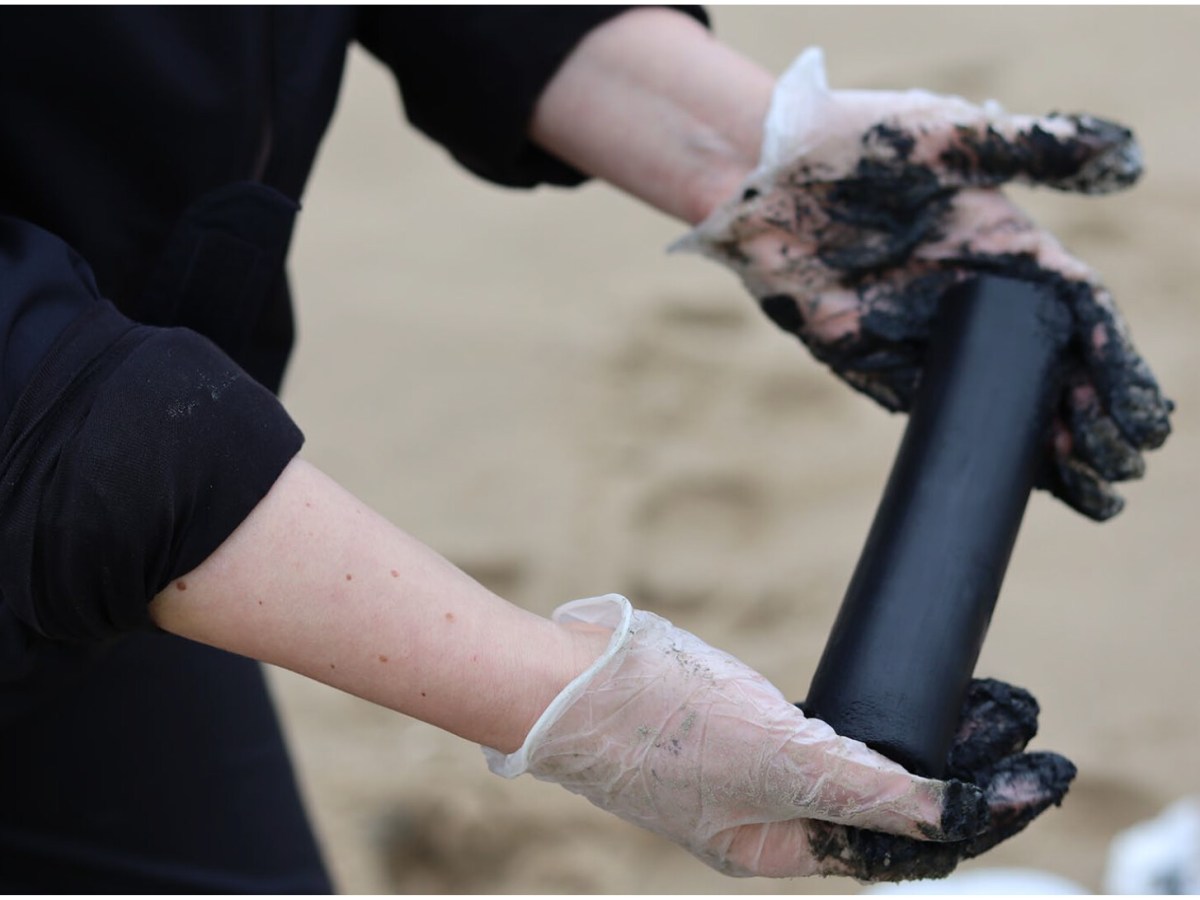
Sedimentary relations: cultures of access and the matter of shallow seabed coring.
Cultural Geographies 2024. Hine, A., Brinkhoff, T., Bolta, A. P., Peters, K., Sammler, K. G., & Tietje, K. Contemporary cultural geographies have increasingly addressed subterranean and deep spaces through questions of access to earthly materials and the politics of resource extraction. This article engages with these themes through an investigation into the ‘doings’ or practices of seabed access. It does so by following the embodied and material experiences of two…

Abyssal Hyperreality
The Society+Space Magazine article by Amelia Hine & Charity Edwards explores increasing interest in polymetallic nodules amid resource constraints and political tensions. It challenges the narrative of deep seabed as lifeless.
 Marine Political Ecology Collective