
is an independent scholar with recent appointments as assistant professor of environmental knowledge, technology, and sustainability studies at University of Twente, NL and as lead of the Marine Political Ecology research cluster at the Helmholtz Institute for Functional Marine Biodiversity. With a PhD in geography and a background in physics and atmospheric sciences, Sammler’s research considers science and politics in the realm of oceans, atmospheres, and outer space, examining the role of knowledge, law, and power in defining global commons, access, and environmental justice.
OUTPUTS
Governing biodiversity: ambiguity and fragmentation in the BBNJ Agreement
Read this open access article here: https://doi.org/10.1016/j.ocecoaman.2025.107913 ABSTRACT: As the global ecological crisis intensifies, international efforts to conserve biodiversity in Areas Beyond National Jurisdiction (ABNJ) has become increasingly urgent. The Biodiversity Beyond National Jurisdiction (BBNJ) Agreement is widely regarded as a breakthrough in ocean governance, yet it enters a legal and conceptual landscape marked by fragmentation and contested definitions of biodiversity. This article examines how biodiversity is framed, interpreted,…

“Our fish are not your marine biodiversity”: tensions in integrating fisheries into the BBNJ Agreement
The 2023 Biodiversity Beyond National Jurisdiction (BBNJ) Agreement aims to conserve and sustainably use marine biodiversity in areas beyond national jurisdiction. However, separating fisheries from broader conservation frameworks has led to fragmented governance. This paper examines how spatial, technological, institutional, and philosophical tensions complicated efforts to integrate fisheries within the BBNJ framework

Bordering marine belonging: The meanings, mobilities and materialities of bioinvasion
This chapter builds focuses specifically on invasive species—particularly more-than-human marine life and aquatic species—and to consider how questions of what belongs where in the ocean realm are shaped by meanings of ‘nativeness’; the movement of things from ‘here’ to ‘there’ (or where they are understood to belong, or not); and the materialities that may be entangled with such meanings and mobilities (i.e. vectors of invasion, such as ‘species on…

Volumetric, embodied and geologic geopolitics of the seabed: offshore tin mining in Indonesia
This paper explores the impact of seabed mining on tin divers near the Bangka and Belitung Islands, challenging traditional geopolitical approaches to governance. It emphasizes the importance of considering volumetric space, embodied experiences, and geologic materiality in mining governance.

The Seabed Mining Activity and Coloring Book
2023 Marine Political Ecology Collective This activity and coloring book can spark joy and wonder about the benthic realm, while also learning about the devastating industry emerging to extract metal and mineral resources from this deep ecosystem. Please feel free to print (double sided), fold, staple (optional), and enjoy! Share with friends and strangers alike. Thanks to our Anne Wolframm for the labor of designing and formatting this zine!

Contesting the Ocean Decade: Plural Provocations on the Universal Sea
Society & Space 2023. Katherine Sammler & Kimberley Peters. This forum offers an alternative engagement with the United Nations Decade of Ocean Science for Sustainable Development (the Ocean Decade) that moves the reader beyond the more frequent policy-centered analysis and attention to a multiplicitous set of provocations and perspectives, reflecting differently on the normative underscorings of power that shape UN agendas, and the ways such schemes are traditionally encountered…

Unblackboxing mediation in the digital mine
The article explores how digital technologies are reshaping mining practices, creating distance between miners and mines. It analyzes the impact of digitization on environmental and social aspects of extraction.

Equity Perspectives on Global Ocean Law and Governance.
The conference in Hamburg on September 7, 2022, focuses on the incorporation of equity concepts into global ocean law and governance, addressing issues like plastics pollution and fisheries management.
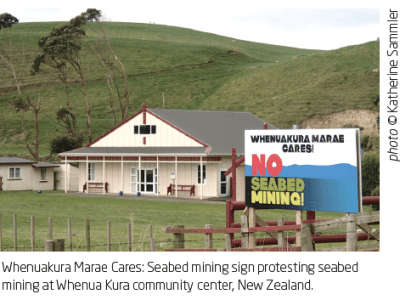
A Marine Political Ecology Perspective: HIFMB Newsletter
In recent years, social science and humanities scholars have expanded their research to the oceans, highlighting their significance in all aspects of life. This interdisciplinary approach aims to develop inclusive critical ocean studies for the Anthropocene era.
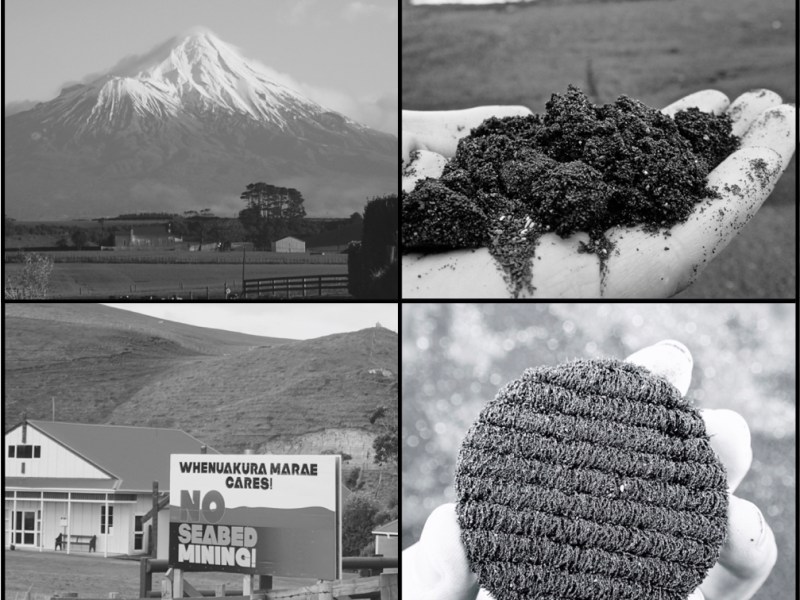
Kauri and the whale: Oceanic matter and meaning in New Zealand
Aotearoa New Zealand, has struggled with translating and implementing UNCLOS, as many in the country question the very division of territory and property along a land/sea binary.
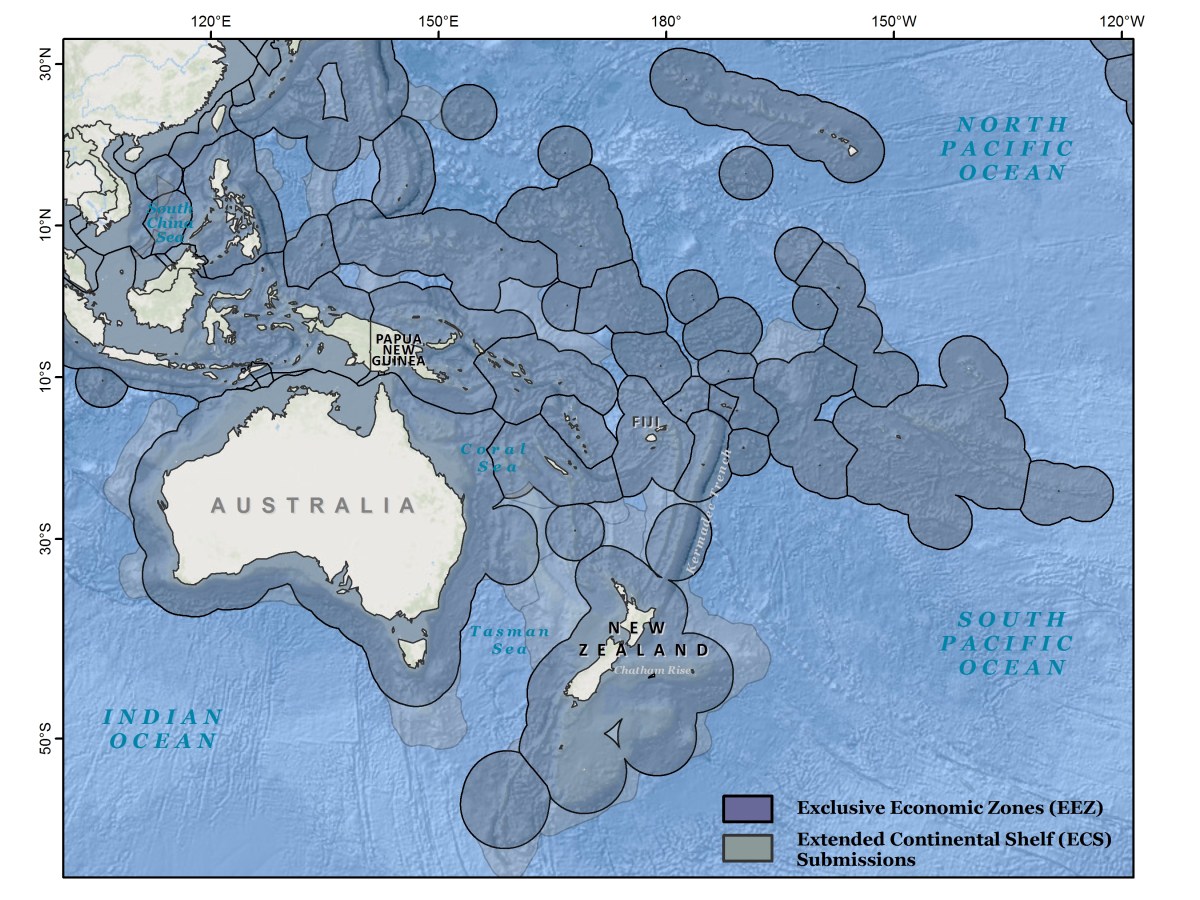
The deep Pacific: Island governance and seabed mineral development
Very little of the ocean’s depths have been explored in detail because of its immensity and the expense of operating in its extreme conditions. Yet in the last few years global metal markets and technological advancements have made deep seabed resource extraction increasingly feasible.
 Marine Political Ecology Collective