is a marine ecologist. Her research focuses on social-ecological systems, coastal-marine spatial planning, and knowledge exchange and coproduction. She investigates the governance of marine commons in the context of accentuating capitalist crises. Her work aims to bring together anti- and decolonial epistemologies and struggles related to conservation ethics and more-than-human relations. She recently worked as a postdoc researcher at the Helmholtz Institute for Functional Marine Biodiversity (HIFMB), Germany and is now postdoctoral researcher in Databases and Geographic Information Systems at Universitat Pompeu Fabra, Department of Political and Social Sciences in Barcelona, Spain.
Outputs

Mudanças Climáticas e Resiliência Socioecológica: Percepções de Comunidades Tradicionais em Reservas Extrativistas Marinhas Brasileiras
Comunidades tradicionais costeiras estão entre as mais vulneráveis às mudanças climáticas, ainda que não tenham contribuído para o surgimento desse fenômeno, demonstrando uma das facetas da injustiça climática. Traditional coastal communities are among the most vulnerable to the effects of climate change, despite having played no role in its emergence. This illustrates one of the…
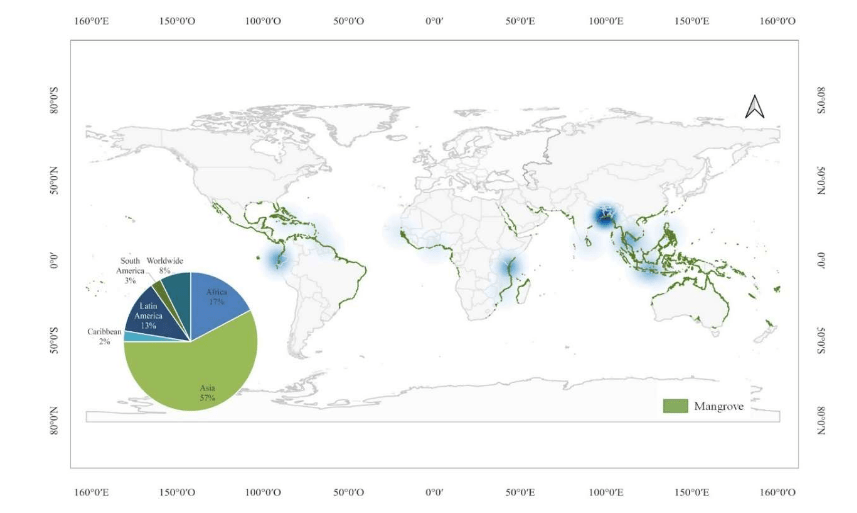
Community-based management and co-management of mangroves in the Anthropocene: A global review of current topics and trends
Mangroves represent one of Earth’s most remarkable ecosystems, serving as critical transition zones between terrestrial and marine environments in tropical and subtropical regions worldwide. These unique coastal forests are invaluable in supporting global biodiversity, protecting coastlines from erosion and storm damage, and providing essential socio-economic benefits to local communities.
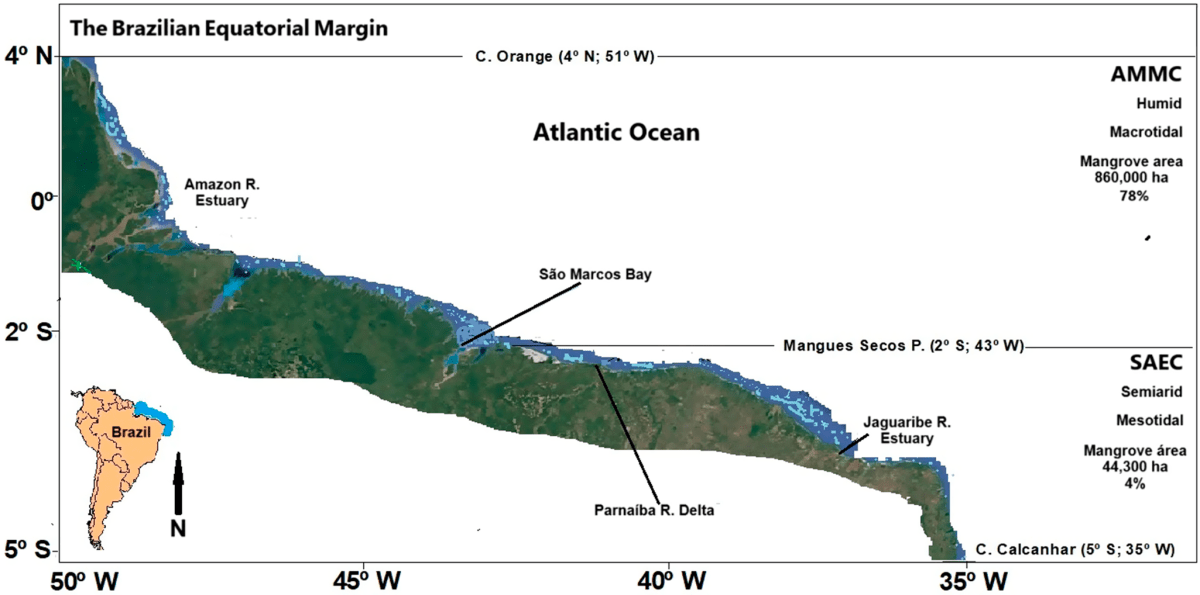
Challenges to mangroves of the Semiarid Equatorial Coast of Brazil in the Anthropocene
Semiarid mangroves in Brazil cover a small extent compared to humid areas, but with high ecological and economic importance that sustain traditional fisheries and high biodiversity, including many threatened species. Although with lower aboveground biomass, they show similar below ground biomass and soil carbon stocks compared to humid mangroves. Their structure and functioning results from…
 Marine Political Ecology Collective